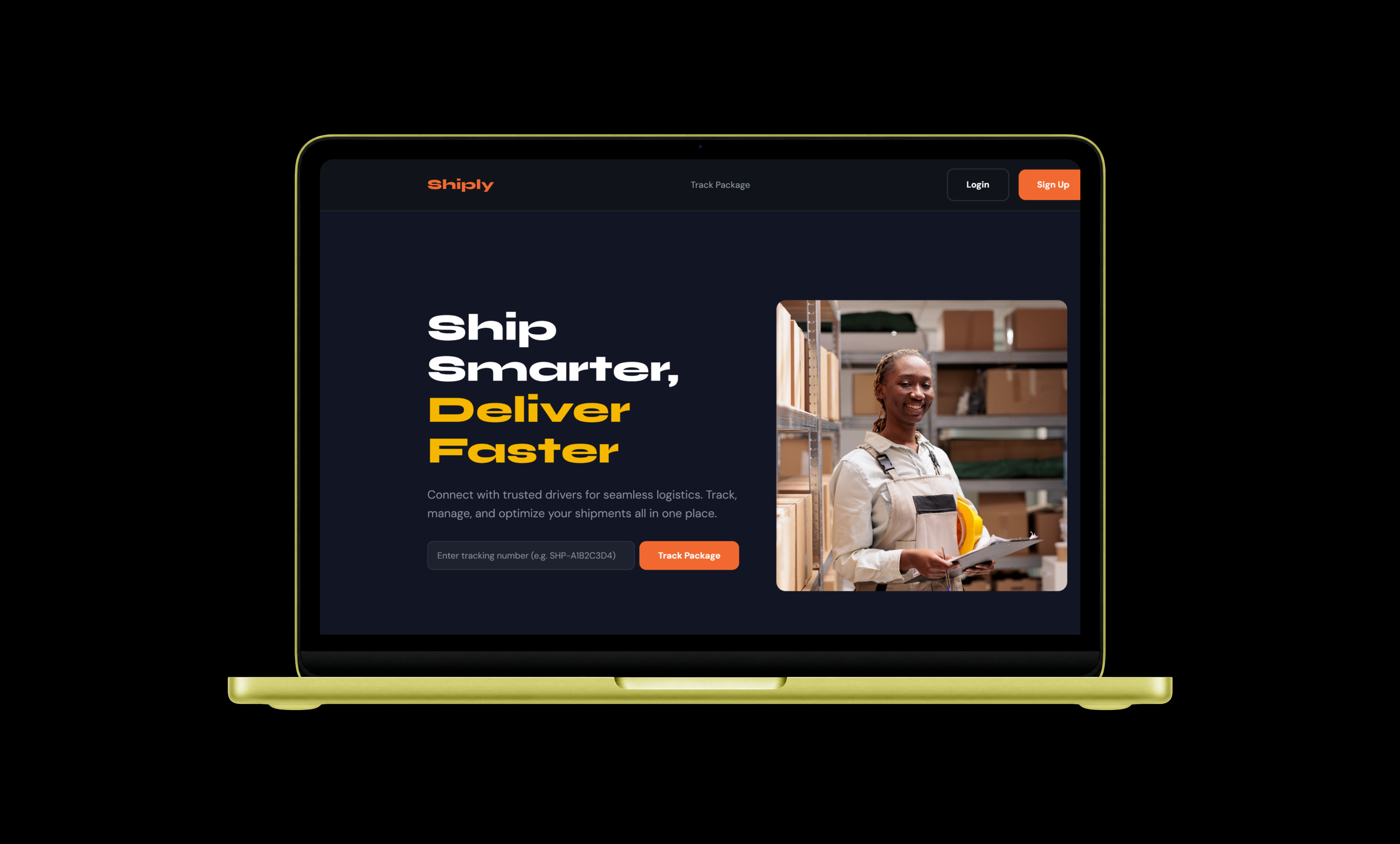
Logistics coordination often involves fragmented communication, inconsistent tracking systems, and inefficient operational workflows.
Users frequently struggle with:
unclear shipment visibility
delayed operational updates
fragmented coordination systems
overwhelming interfaces
inefficient task management
The challenge was to design and build a system that simplified operational complexity while preserving functionality and scalability.
My Role
I contributed across both product design and full-stack implementation, working on:
This project also became an exploration into how scalable technical systems support operationally complex user experiences.
Design Approach
The platform focused heavily on workflow-centered interaction design.
Key priorities included:
improving shipment visibility
simplifying operational coordination
reducing workflow friction
designing scalable dashboard systems
creating intuitive tracking experiences
maintaining responsive multi-device usability
Special attention was given to information hierarchy and operational clarity to help users quickly understand important delivery and coordination data.
Technical Exploration
Shiply was developed as a full-stack application, enabling exploration across both product experience and system implementation.
Areas explored included:
frontend architecture
backend workflow systems
operational dashboard logic
responsive UI implementation
scalable multi-page application structures
interaction feedback patterns
This helped deepen my understanding of workflow-driven systems and how technical architecture influences usability in operational products.
Outcome
Shiply evolved into a systems-oriented product and engineering exploration focused on logistics coordination and operational workflows.
The project strengthened my understanding of scalable product systems, technically-informed interaction design, and building interfaces for operational complexity.